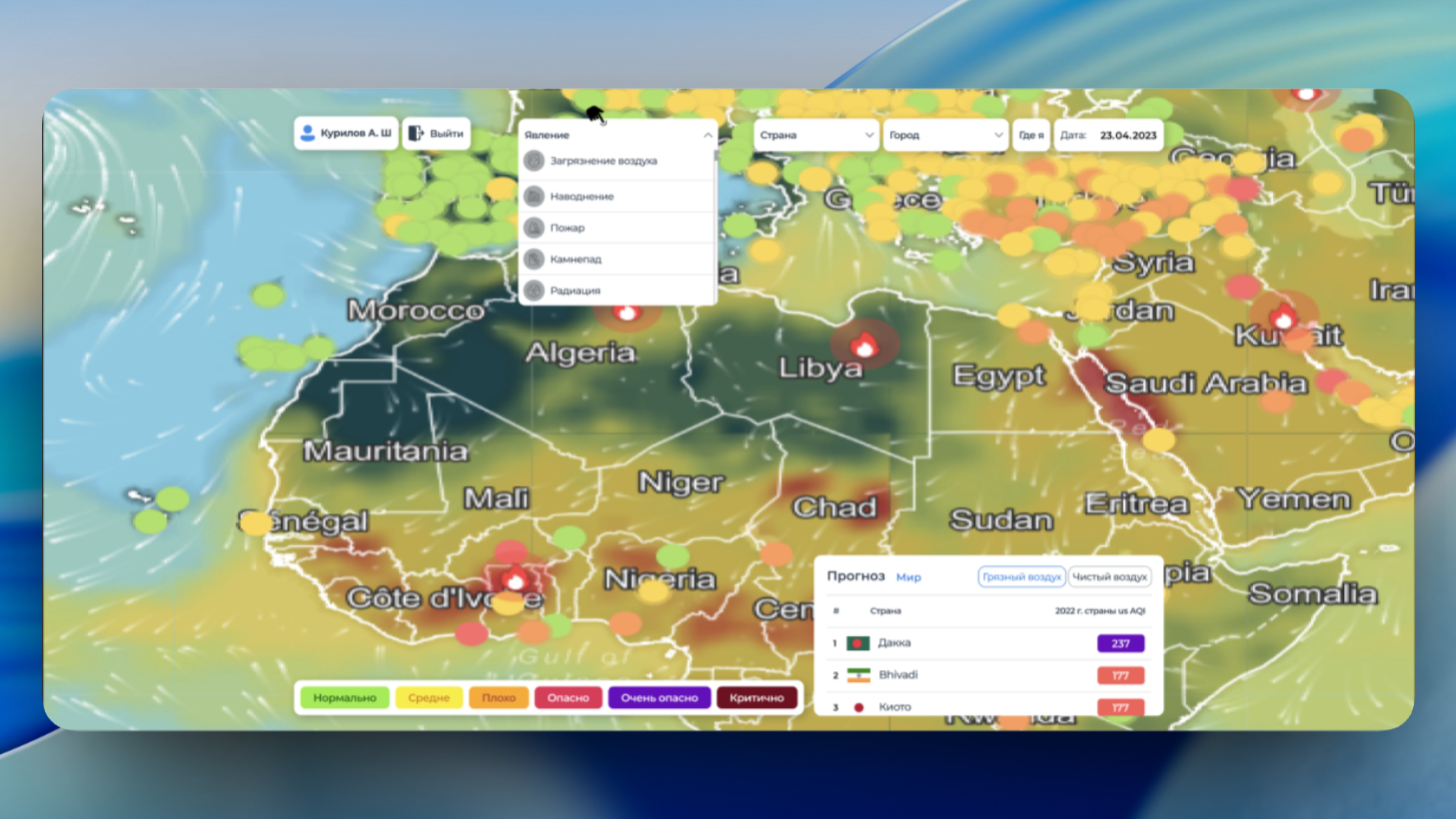
Task
The project's task is to develop a management tool for emergency response services that makes it possible to:
collect and structure calls,
allocate forces and resources optimally,
keep operational records of completed work,
analyze response efficiency,
improve interaction between units and control centers.
Work stages
⦁ Analytics
An analysis was carried out of the current needs of emergency services, call-handling processes and the logistics of responding to emergencies. This made it possible to define the key functions of the system: call logging, geolocation of forces, analytical reporting and integration with existing services.
⦁ Design
An interface with a clear structure and several access levels was created — for dispatchers, rescuers, unit heads and analysts. Particular emphasis was placed on clear visualization of calls and task flow dates.
⦁ Development and testing
The system was implemented with a modular architecture that includes databases, web and mobile app interfaces, as well as integration with GPS tracking of vehicles. Testing was carried out under simulated real calls, along with load testing to ensure stable operation with a large number of requests.
Features
Centralized logging of incoming calls
Real-time allocation of resources and vehicles
Powerful analytics and reporting
Role-based access (dispatchers, heads, analysts)
Mobile device support for operational work in the field
The ability to save and compare incident records
Integration with GPS and the services' communication systems
Results
A system was created that increases the efficiency of emergency response
Resource allocation and unit notification were accelerated
Call response time was reduced thanks to data analysis
Interaction between firefighters, medics and rescuers was improved
Reviews
“CareMe24 was developed to take the work of emergency services to a new level of efficiency. Our goal was to combine call logging, resource allocation and analytical capabilities in a single system. We are pleased with the result: the system has made dispatchers' work easier and has made it possible to increase the speed of response to emergencies, especially in coordination between firefighters, medics and rescuers.”